Construct Binary Tree from Preorder and Postorder Traversal — Algorithm Visualization & Coding Challenge
Choose Your Learning Path
How would you like to learn today?
Visualize algorithms in real time, explore them step by step, or challenge yourself with a test.Choose a path to focus—or scroll down to preview all options.
🧠 Active Learning
Visualize the algorithm step-by-step with interactive animations in real time.
📖 Passive Learning
Read the full explanation, examples, and starter code at your own pace.
🎯 Challenge Mode
Drag and arrange the algorithm steps in the correct execution order.
🧠 Select Active to activate
Watch algorithms run step by step.
Follow every state change, comparison, and transformation as the execution unfolds in real time.
📖 Select Passive to activate
Understanding Construct Binary Tree from Preorder and Postorder Traversal
Detailed explanation and reference materialsProblem Overview
Construct Binary Tree from Preorder and Postorder Traversal
Problem Statement
You are given two arrays representing the preorder and postorder traversals of a binary tree with unique values. Your task is to reconstruct the binary tree from these traversals and return its root.
- Preorder Traversal: Visit the root first, then the left subtree, and finally the right subtree.
- Postorder Traversal: Visit the left subtree first, then the right subtree, and finally the root.
If multiple valid trees exist, you can return any one of them.
Task
Implement a function that reconstructs the binary tree given:
preorder: an array of integers representing the preorder traversal.postorder: an array of integers representing the postorder traversal.
Test Cases
Test Case 1
Input:
  "preorder": [1, 2, 4, 5, 3, 6, 7],
  "postorder": [4, 5, 2, 6, 7, 3, 1]
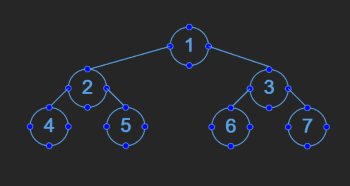 Output:
[1,2,3,4,5,6,7]
Test Case 2
Input:
  "preorder": [10, 20, 40, 50, 30, 60],
  "postorder": [40, 50, 20, 60, 30, 10]
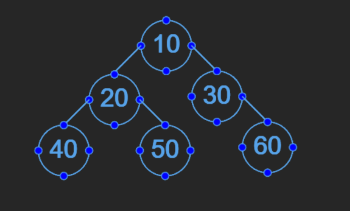 OUTPUT:
[10,20,30,40,50,60]
Constraints
- The number of nodes is between 1 and 30.
- All values in
preorderare unique. postorderis a permutation ofpreorderand represents the postorder traversal of the same tree.
Approach
- Identify the Root:
- The first element in
preorderis the root of the tree. - The last element in
postorderis also the root.
- The first element in
- Divide and Conquer:
- Use the next element in
preorder(after the root) to determine the boundary of the left subtree inpostorder. - Recursively construct the left subtree using the corresponding segments from both arrays.
- Similarly, construct the right subtree with the remaining segments.
- Use the next element in
- Construct the Tree:
- Combine the results from the recursive calls to form the entire binary tree.
- Return the root of the constructed tree.
Starter Code
🎯 Select Challenge to activate
Think & Arrange, Don't Just Copy-Paste
Drag and arrange the algorithm steps in the correct execution order instead of spending time typing code letter by letter.
Arrange the Algorithm Correctly 🧩
The algorithm is divided into three logical parts. Carefully rearrange each section in the correct order to form a complete and valid solution.
Understand Below AlgorithmOR
Don't Know Current Algorithm ?
Green text means the instruction is placed in the correct position.
Red text means the instruction is in the wrong position.
Instructions with the same background color indicate particular blocks start and end.
A tick mark means the instruction is correct and locked.
🔒 Locked steps cannot be moved. Only unlocked steps are draggable.
🔊 Enable sound for swap feedback and completion effects.